Kitchen cleaning

Wherever food is cooked, there will be stubborn stains. Grease and food residues must be systematically removed in accordance with the HACCP guidelines in order to eliminate breeding grounds for microorganisms. What can high-pressure cleaners, surface cleaners, steam cleaners, scrubbers or scrubber driers do? What specifics need to be considered when using them? And what should disinfection look like? Here is an overview.

Kitchen cleaning_04_Utensils_HD

Work up a lather: Tiles and surfaces

Bright tiles and stainless steel characterise the appearance of commercial kitchens. To clean dirt off the tiles at the end of a working day, high-pressure cleaners can be used in combination with foam nozzles or cup foam lances. With the aid of the appropriate foam cleaning agents (alkaline/neutral/acidic) and air, which is added at the nozzle, high-pressure cleaners generate foam with the high-pressure jet. The foam is applied from a distance of about one to two metres, working from bottom to top, to make use of the large ejection width. The great thing about this system is that firstly, you can see where the cleaning agent has been applied and secondly, the foam stays in place for longer than a normal cleaning agent, so the contact time is increased.

However, it is important to use only as much foam as comes into direct contact with the surface you wish to clean. This allows you to work efficiently and avoids the problem of excess foam sliding down the surface due to its own weight, which would cancel out the benefit of the increased contact time. The cleaning process is subsequently carried out from top to bottom.

The only thing to note when using acidic cleaning agents is that the tile joints must first be rinsed with water. This prevents the acid from soaking in and attacking the grouting.

Gently does it: Using pressure on machines, kitchen utensils, knobs, electrics, etc.

For cleaning large kitchen utensils, high-pressure cleaners which regulate the water pressure and quantity at the high-pressure gun are often required. This makes it possible to work with the appropriate combination without the dirt being splashed back towards the user. In addition, as with all electrical fittings, work must be carried out carefully with reduced pressure in order not to damage the sensitive electrical systems. Tools that have proven successful in this respect are very short lances (250 mm) or short spray units, such as a power nozzle fitted directly onto the high-pressure gun. Depending on the size of the kitchen, it may be useful to have either a mobile high-pressure cleaner or a stationary high-pressure unit that has an outlet in various places for very large rooms.

Kitchen cleaning_05_Utensils_HD_Stationary
SG4_Close-up_GIF

Steam: A hygienic alternative

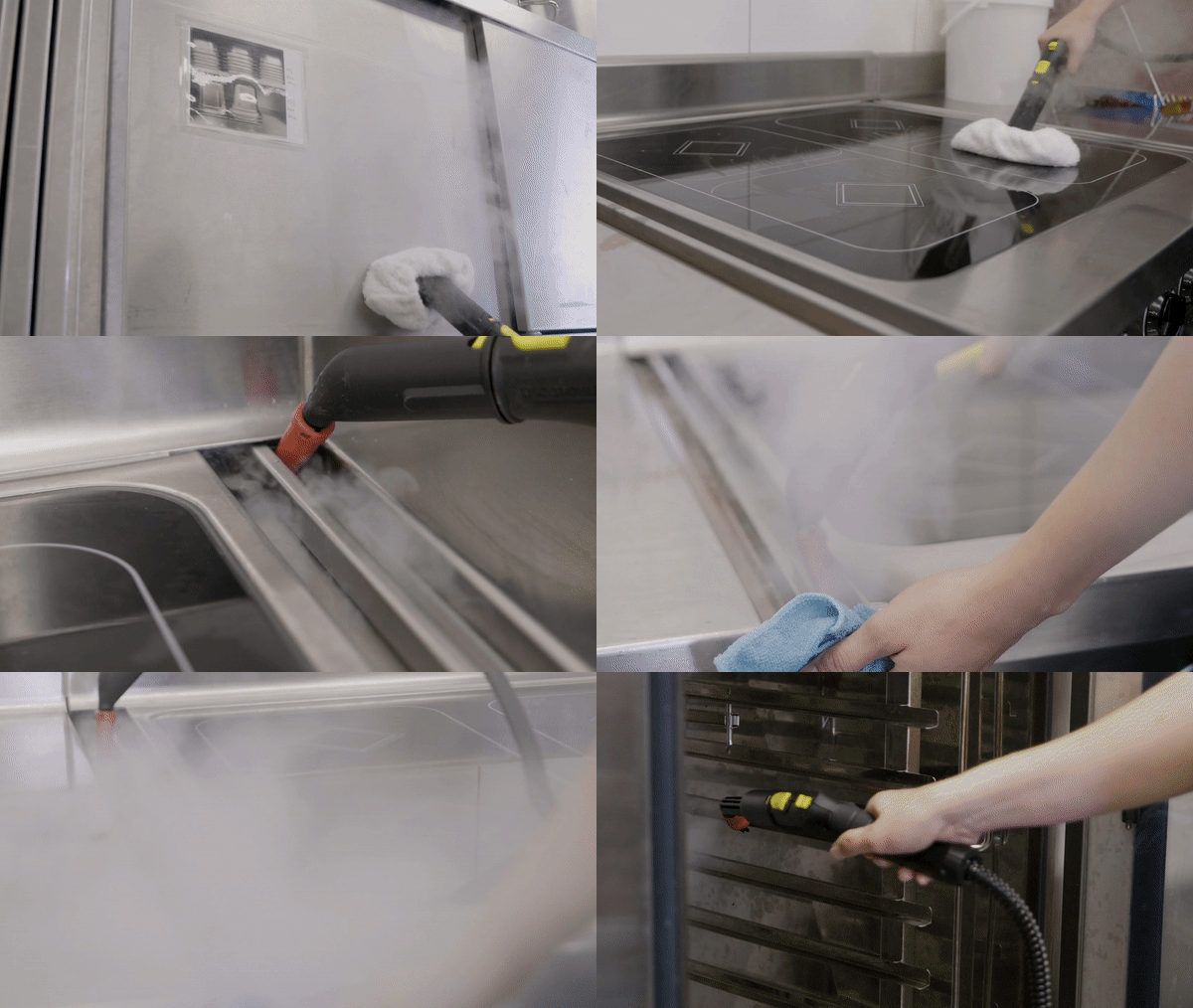
You can also reach the required hygiene levels for machines and kitchen utensils by using steam cleaners. The steam emerges in very fine drops at a temperature of 100 °C and a pressure of 3 to 4 bar. This means that the steam gets into every crevice that a brush or cloth would struggle to reach. In this way, the edge areas of the front panels of dishwashing machines, the on/off switches of ovens or ribbed surfaces can be cleaned hygienically and thoroughly.

Tip: Freezers can be defrosted in much less time if steam is applied between the ice and the inner wall.

Manual surface cleaning

For quick cleaning here and there while the kitchen in operation, you can rely on manual surface cleaning. Food contact surfaces should always be disinfected only when they have been cleaned or are clean to the eye. In kitchens, it is important to flush surfaces with clean drinking water after the disinfectant contact time in order to eliminate any residual disinfectant or cleaning agent on the surfaces.

Manual cleaning

Surface cleaners, scrubber driers or steam cleaners: The floor

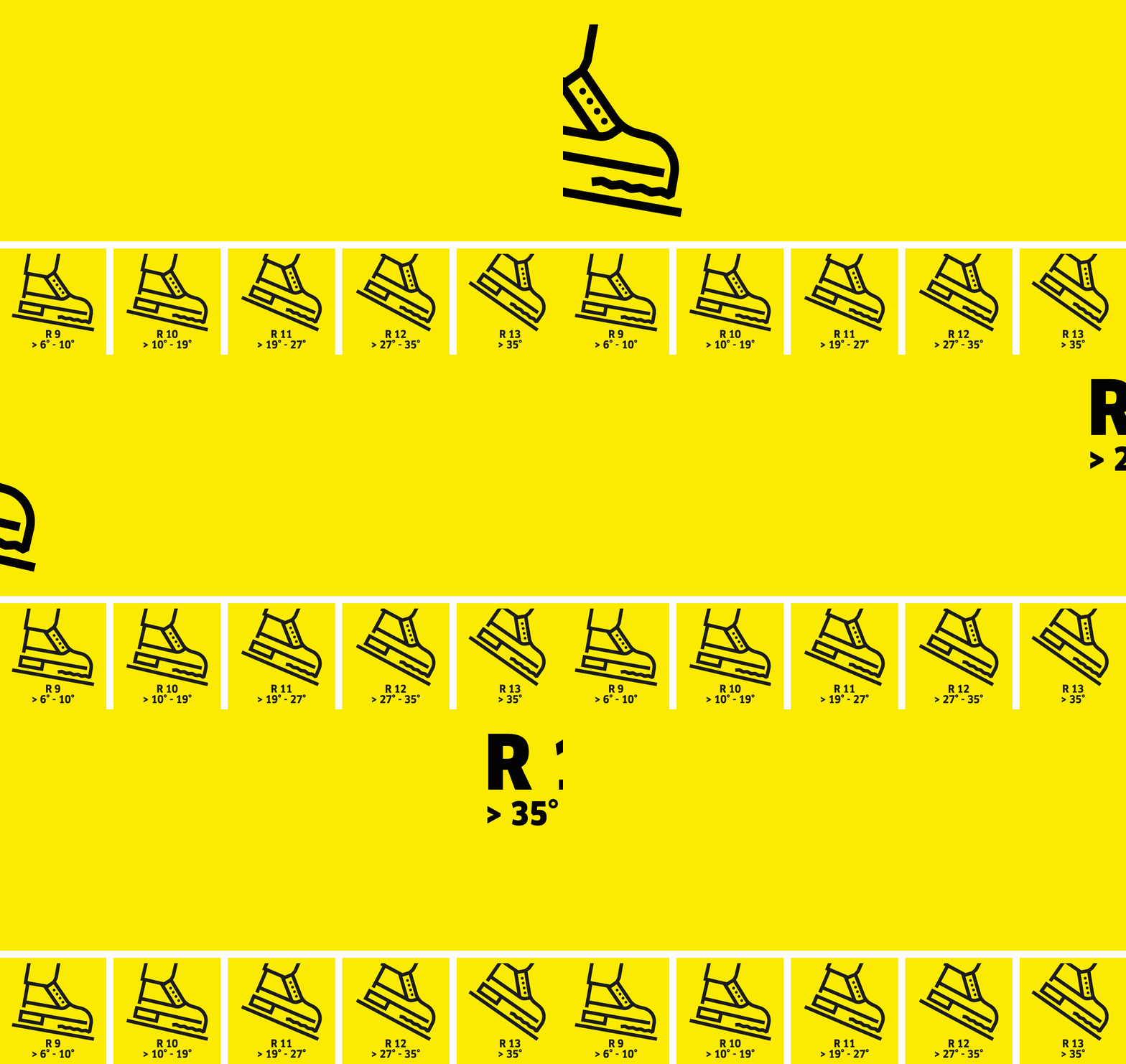
The floor of a commercial kitchen is a particular challenge. The reason behind this is that a very high anti-slip level is a requirement in order to prevent work accidents. Where normal floors offer an anti-slip value of R9, commercial kitchen floors must have a value of R11 to R13. Textured tiles also have displacement nubs so that water does not create a risk of slipping. Grease and food residue deposited throughout the working day gets caught between these nubs.

Cleaning fine stoneware tiles with Kärcher equipment

Cleaning fine stoneware tiles

Fine stoneware tiles are an attractive, very popular floor covering which stands out thanks to its robust and slip-resistant qualities, as well as its very low moisture absorption rate. A modern and safe design medium, it is impossible to imagine floor coverings without fine stone nowadays.

Types of dirt and the right cleaning agent in the kitchen area

In food processing, stubborn dirt often consists of a film of carbohydrates, proteins or fats.

In cleaning agents, different ingredients are involved in the cleaning performance, for example alkalis, acids, solvents, surfactants and water.

Alkaline cleaning agents

Alkaline cleaning agents are suitable for the removal of oils, greases and soiling containing protein. Alkaline solutions are often also referred to as "basic" and have a pH value of between 7 and 14.

Acidic cleaning agents

Acidic cleaning agents remove mineral soiling, such as limescale in washbasins. They sometimes have disinfectant properties. The acidic range is between 0 and 7 on the pH scale.

Surfactants

Surfactants reduce the surface tension of water, allowing water and dirt (oil and grease contamination) to mix by forming emulsions. Without this mixing, the soiling cannot be dissolved and removed. Surfactants are present in almost all cleaning agents. Soaps also fall into the category of surfactants. A neutral foam cleaner is often a good choice for cleaning in kitchens, as it is gentle on materials and removes oil, grease and protein stains thanks to the surfactants it contains.